
Bicycle Accident Reconstruction: The Hidden Backbone of Your Injury Claim
After a serious bicycle crash, the scene may be cleared within minutes. But determining who is legally responsible can take months of careful investigation. Bicycle accident reconstruction bridges that gap between chaotic impact and courtroom clarity. Using science, engineering, and legal analysis, reconstruction experts translate scattered evidence into a detailed sequence of events. For injured cyclists and their families, that sequence often becomes the foundation for proving fault and recovering full compensation.
What Bicycle Accident Reconstruction Actually Is
Bicycle accident reconstruction is a specialized discipline focused on figuring out how and why a crash happened. It draws on physics, biomechanics, traffic engineering, and human factors to analyze each contributing element. In a personal injury case, the goal is not only to explain the collision, but to identify which parties violated safety rules or legal duties. Reconstruction goes beyond eyewitness stories and looks at verifiable physical evidence. That evidence then supports a clear narrative that can stand up to insurance scrutiny and trial cross examination.
In legal terms, reconstruction helps answer two critical questions about fault and liability. First, it shows who caused the dangerous situation by acting carelessly or violating traffic laws. Second, it connects those actions to specific injuries and financial losses the cyclist suffered. When an attorney presents this analysis, it transforms complex technical data into persuasive legal arguments. That transformation can be the difference between a denied claim and a meaningful settlement.
Evidence Experts Look For at the Crash Scene
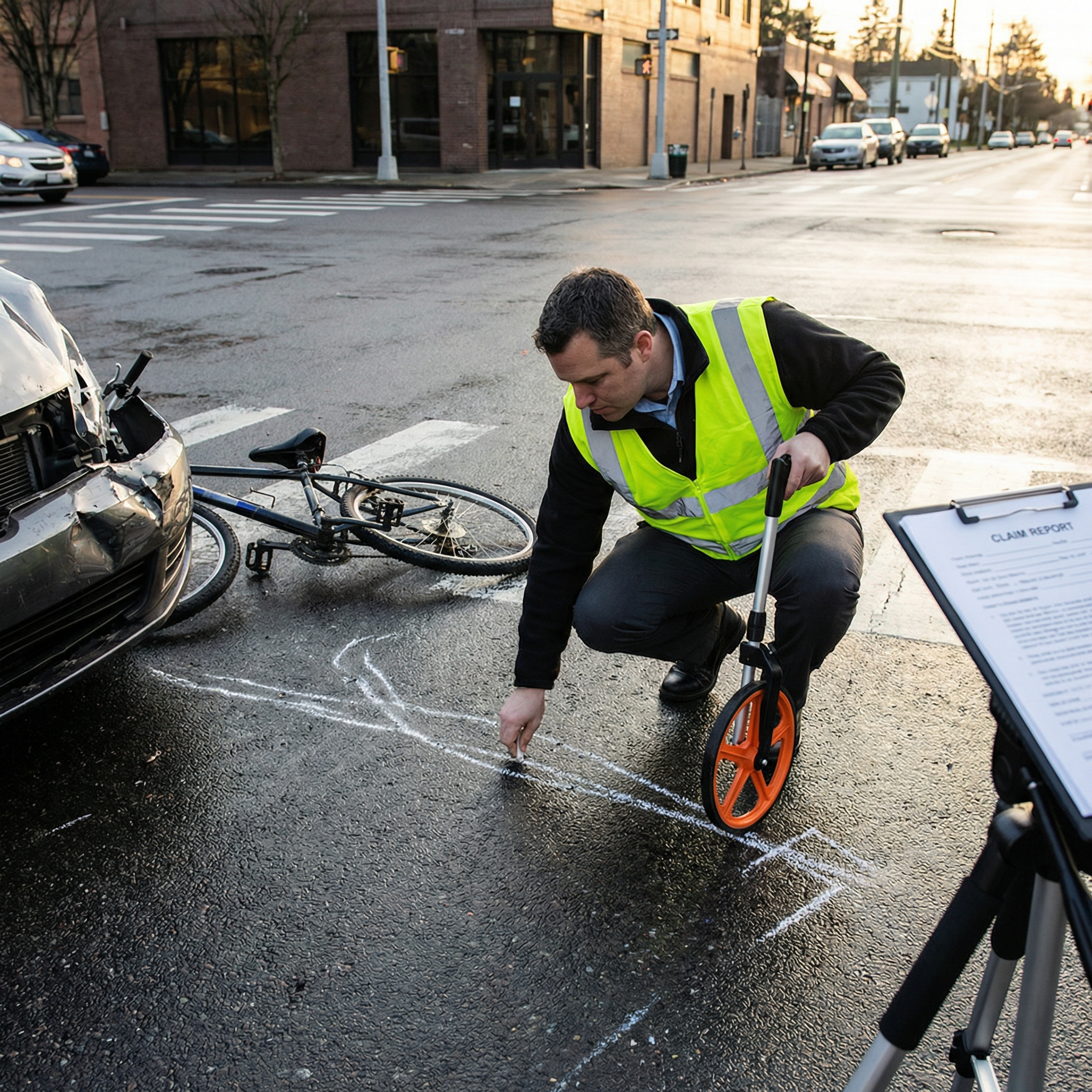
Reconstruction experts start by identifying every clue the collision left behind. They look at vehicle positions, tire marks, gouges in the pavement, and debris patterns. Damage to the bicycle itself, such as bent wheels or crushed frames, can reveal impact direction and force. Injuries documented in medical records can also help show how the cyclist was positioned at the moment of impact. Together, these details create a physical map of the crash that is far more reliable than fading memories.
Modern technology adds even more layers of valuable evidence. Many vehicles record speed and braking data that can be downloaded and analyzed. Nearby businesses or homes often have security cameras that capture approach angles, traffic light status, or driver behavior. Smartphones, cycling computers, and fitness trackers sometimes store GPS information about speed and route. A skilled personal injury lawyer moves quickly to preserve these sources before they are overwritten or lost. That prompt action allows the reconstruction expert to build a complete and accurate picture.
Using Physics to Pinpoint Cause and Fault
Once evidence is gathered, reconstruction specialists apply physics to explain what happened step by step. By calculating speeds, stopping distances, and reaction times, they test whether each party had a reasonable chance to avoid the collision. They analyze sight lines to see if a driver should have seen a cyclist sooner or anticipated their path. They also consider how road design, weather, and lighting affected visibility and traction. These calculations are then translated into visuals and explanations that judges, juries, and insurance adjusters can understand.
This scientific analysis plays a direct role in assigning legal fault. For example, if calculations show that a vehicle was traveling over the speed limit, that supports a claim of negligent driving. If stopping distance studies reveal that a driver could have braked in time but did not, that undercuts arguments blaming the cyclist. In some cases, physics reveals that a government entity failed to design or maintain a safe roadway. When the chain of events is backed by objective science, it becomes much harder for opposing parties to shift blame onto the injured rider.
When Reconstruction Changes Fault and Liability
Many bicycle injury cases look straightforward at first glance, but reconstruction can flip initial assumptions. A police report might blame a cyclist for riding outside a bike lane, yet scene measurements may show the lane was blocked or unsafe. A driver might claim the cyclist suddenly swerved, but damage patterns can indicate the vehicle actually drifted into the rider. Witnesses can genuinely misremember speeds and distances, especially in stressful situations. Reconstruction evidence helps correct these errors and refocuses attention on the true legal violations.
Reconstruction can also expand the list of potentially liable parties. For example, a crash that appears to involve only a driver and cyclist may actually stem from a defective bike component or dangerous road defect. Detailed analysis might reveal a pothole, missing sign, or poorly timed traffic signal that played a major role. In those situations, liability might extend to a municipality, contractor, or product manufacturer. Your personal injury attorney uses reconstruction findings to identify all responsible entities and pursue compensation from each of them. That broader approach can significantly increase available recovery for medical bills and long term losses.
Working With a Personal Injury Lawyer and Reconstruction Expert
Bicycle accident reconstruction is most effective when your lawyer and expert collaborate from the beginning. An experienced personal injury attorney understands which questions the expert must answer for insurance companies and juries. They provide medical records, photographs, and witness statements that support the technical analysis. In turn, the reconstruction expert supplies diagrams, timelines, and reports that the lawyer weaves into legal arguments. This teamwork helps ensure that scientific conclusions align with the legal standards for negligence and liability in your jurisdiction.
Timing is critical, so attorneys often retain reconstruction experts soon after a client calls their office. Quick involvement increases the chances of visiting the scene before conditions change and gathering perishable evidence. Your lawyer may also instruct you on how to preserve your damaged bike, helmet, and clothing for later inspection. Throughout the case, they will translate the expert’s findings into clear explanations for you and your family. That communication helps you make informed decisions about settlement offers and whether to proceed to trial.
Common Myths About Bike Crashes and How Reconstruction Debunks Them
Several myths about bicycle crashes regularly appear in police reports and insurance defenses. One common belief is that the cyclist must be at fault if struck from behind. Reconstruction frequently shows the opposite, revealing that a driver was distracted, speeding, or following too closely. Another myth is that riding at night automatically makes a cyclist responsible for any collision. In reality, experts can determine whether the rider’s lights and reflective gear were sufficient and whether the driver had ample time to react.
There is also a misconception that failure to use a bike lane always defeats a claim. Reconstruction analysis often shows that bike lanes were blocked, poorly designed, or unsafe due to traffic conditions. Experts can demonstrate that a reasonably careful cyclist would have chosen the same lane position under those circumstances. By challenging myths with data, your legal team protects you from unfair blame based on bias or assumptions. That protection is crucial in negotiations where insurers seek any excuse to reduce payouts.
Steps to Protect Your Case So Reconstruction Can Work for You
What you do immediately after a bicycle crash can make or break a future reconstruction. If you are able, try to note vehicle positions, traffic signals, and any hazards on the road. Photographs of skid marks, debris, and damage can be invaluable to experts later. Names and contact information for witnesses may help confirm or clarify technical findings. Even brief notes captured on your phone before memories fade can support a more accurate analysis.
After emergency medical needs are addressed, contacting a personal injury lawyer should be a priority. Your attorney can move quickly to preserve video footage, obtain police reports, and prevent vehicles from being repaired before inspection. They may advise you not to discuss fault with insurers until reconstruction is underway and facts are clear. Keeping your damaged equipment, clothing, and helmet intact gives experts more to work with. By taking these steps, you give reconstruction professionals the tools they need to prove fault and protect your right to full compensation.