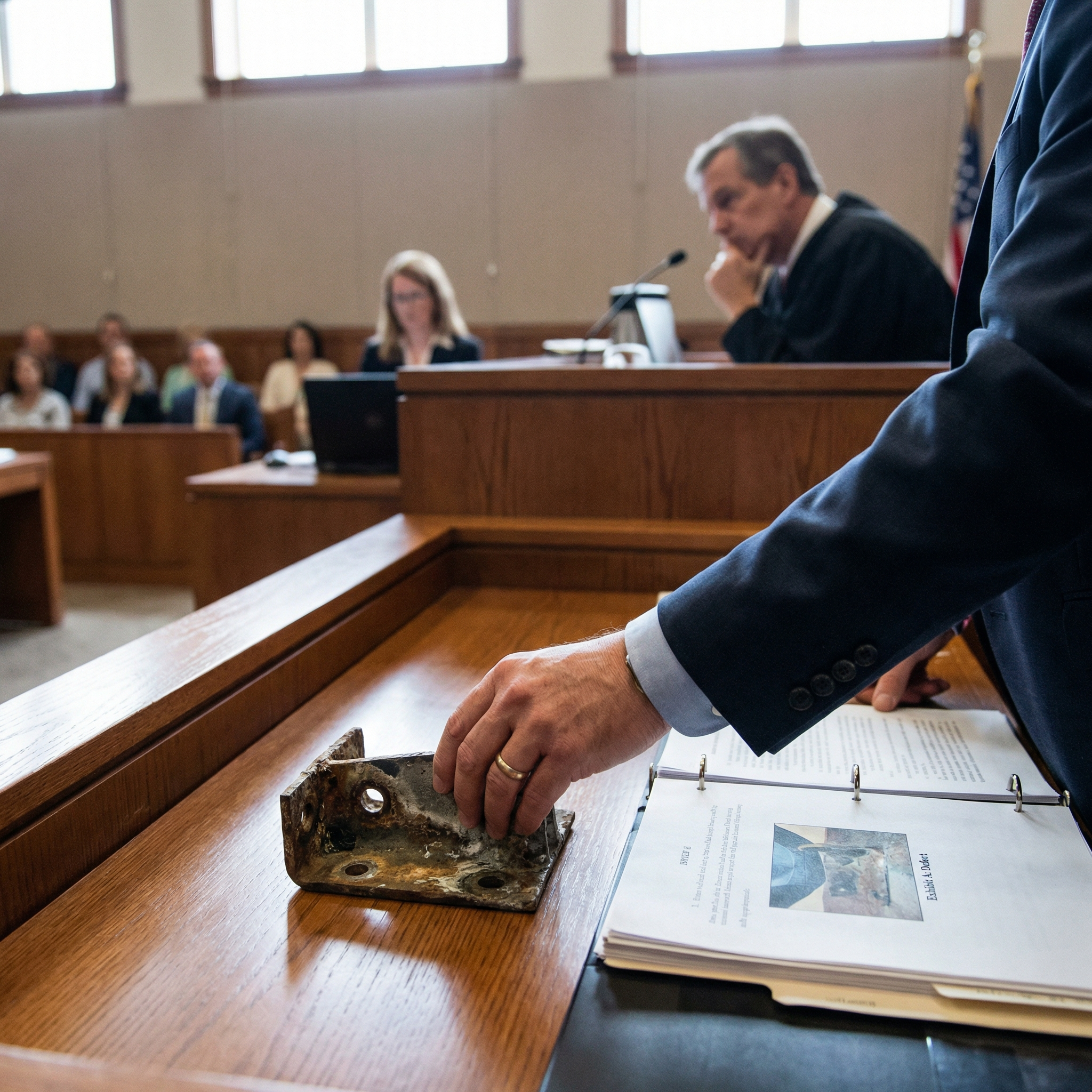


Real Stories, Real Stakes in Personal Injury Law
Recent headlines in personal injury law show how much is on the line for injured people and their families. Juries have ordered multi-million-dollar verdicts, like a $9 million award against a major insurer after an insured driver endured three separate trials. Others have secured six-figure recoveries as pedestrians in crosswalks, riders on city buses, and drivers with spinal injuries.
At the same time, a record $242 million wildfire verdict, high-profile litigation involving aircraft manufacturers, and sexual abuse claims against youth rehabilitative programs underline the reach of modern personal injury and mass tort litigation. Each result, large or small, reflects years of preparation, strategy, and the courage of clients willing to keep fighting.
Verdicts That Turn on Credibility and Persistence
One insured driver had to sit through three separate trials before six jurors finally ordered State Farm to pay $9 million. Her lawyer described the verdict as lifting a weight from her shoulders, because a jury of six people ultimately came back and said she was right.
That kind of persistence matters across the spectrum of personal injury law, from city bus cases to wildfire claims. Whether a Philadelphia jury returning a $1 million verdict against a transit authority, or an Oregon jury issuing a record wildfire award, these outcomes show that jurors respond when a case is prepared thoroughly and presented consistently, even after setbacks.
Trial Psychology: What You Say and How You React
One Olympic athlete who is also a personal injury lawyer draws directly on sports psychology in the courtroom. In his words, to be an all-around, complete trial lawyer, you have to think about the psychology of everything you are doing, what you are saying, and how you react to things.
That mindset applies whether you are trying a spinal injury case, a crosswalk collision, or a mass tort claim. Jurors watch not only the evidence, but the way advocates present it and respond under pressure.
- Be intentional about every question, statement, and objection, knowing that jurors are constantly evaluating credibility.
- Monitor your reactions when things go badly, the way an athlete resets after a bad play.
- Remember that for the client, as in the insured driver’s third trial, a verdict can feel like emotional vindication as much as financial relief.
High-Road Mediation and Six-Figure Settlements
Not every strong personal injury case reaches a jury. Some resolve with substantial pre-suit or pre-trial settlements, like a driver with spinal injuries who obtained a $250,000 settlement before filing suit, or a pedestrian hit in a crosswalk who secured $250,000 for neck and lower-back injuries.
In mediation, one experienced personal injury lawyer advocates taking the high road. High-road mediation builds integrity through preparation, transparency and consistency while avoiding pressure tactics.
- Preparation: Arrive at mediation with medical records, damages analyses, and liability facts organized and ready.
- Transparency: Share key information instead of hiding it, so the mediator and the other side can realistically evaluate risk.
- Consistency: Keep your position steady from demand letters through mediation, reinforcing that you have a well-founded valuation of the claim.
- No pressure tactics: Reduce headaches and impasses by focusing on fair resolution rather than brinkmanship.
Over time, this approach builds reputational capital that benefits individual cases and strengthens confidence in mediation as a tool for resolution.
AI and the Hidden Value in Medical Records
One Houston personal injury firm, initially skeptical of artificial intelligence, now credits AI with increasing its settlements by 300%. The firm reports that AI spots language and key details in medical records that the team had previously overlooked.
That experience tracks with what many verdicts reflect: the details of injuries matter. A motorcyclist claiming injuries to the neck, shoulder, wrist and knee, or a pedestrian with neck and lower-back injuries, can present very different cases depending on how thoroughly those injuries are documented and explained.
- Look closely at the words doctors use in medical records; subtle language can support higher valuations.
- Use tools, including AI when available, to flag inconsistencies or missed references to injury locations and symptoms.
- Revisit records periodically as settlement talks progress, ensuring evolving diagnoses and complaints make it into your demand.
When advocates surface every relevant detail, they help insurers, mediators, and juries appreciate the full impact of a client’s injuries.
Winter Crashes, Fading Evidence and Delayed Injuries
Winter car accidents present special challenges for injured people. As one Erie practitioner notes, winter crashes are different from warm-weather accidents not just because of snow and ice, but because injuries, evidence and responsibility are often harder to see clearly in the aftermath.
What feels minor in the cold can turn serious days later, and what looks obvious at the scene can become disputed once the roads are cleared and stories change. That reality should shape both client decisions and legal strategy.
- Recognize that pain masked by cold or adrenaline may worsen after the crash, especially in the neck, back and joints.
- Treat early documentation of the scene, vehicles and weather conditions as vital, because visual evidence may vanish quickly.
- Expect disputes over responsibility once memories fade and physical clues disappear, and prepare to counter shifting narratives.
Insurance Conduct, Punitive Damages and Systemic Stakes
Beyond individual cases, recent developments highlight the broader stakes of personal injury law. An appellate decision addressing the constitutionality of allegedly excessive punitive damages affirmed that some punitive awards can be excessive, but also found error in the trial court’s calculations for a new award.
Debates over punitive damages intersect with concerns about automobile insurance fraud. One editorial warns that if an Appellate Division decision is reversed, substantial claims of insurance fraud may go unredressed, insurance companies will lose money, premiums will increase, and perpetrators of wrongful acts will be rewarded.
For injured people and their lawyers, these trends reinforce the need to build strong, fact-driven cases that justify both compensatory damages and, when appropriate, punitive awards that can withstand appellate scrutiny.
Pulling It Together for Stronger Personal Injury Advocacy
Taken together, these verdicts, settlements and commentaries offer a practical roadmap. Persistence across multiple trials, psychological awareness in the courtroom, integrity in mediation, careful mining of medical records, and early attention to winter crash evidence all shape outcomes.
At every stage, personal injury advocacy is about revealing the full truth of an injury and its consequences. When lawyers and clients combine careful preparation with strategic, high-integrity advocacy, they give juries, judges, insurers and mediators the tools they need to deliver just results.