

Occupational Health Standards As The Quiet Hero In Injury Cases
Every safe workday you enjoy is backed by written rules that most people never see. Occupational health standards spell out how employers must design tasks, train workers, and control hazards before someone gets hurt. When those standards are followed, many serious injuries never happen at all. When they are ignored, the gap between what should have been done and what actually happened becomes powerful evidence in a personal injury claim. Knowing how these rules work can help injured workers turn a painful event into a strong legal case.
Personal injury and workplace injury lawyers routinely use safety standards as a roadmap to prove fault. They compare the employer’s actual practices to written requirements from agencies, industry groups, and even the company’s own policies. That comparison often reveals a pattern of shortcuts, missing equipment, or inadequate training that made an injury far more likely. For injured workers, understanding this framework can make the difference between accepting a low offer and pursuing the full compensation the law allows.
From Safety Rule To Legal Duty: What Occupational Health Standards Really Do
Occupational health standards are more than suggestions; they translate into legal duties employers owe to their workers. These rules cover issues such as machine guarding, fall protection, chemical exposure, ergonomic design, and emergency procedures. When an employer fails to meet those duties and a worker is injured, that missed standard can become a cornerstone of negligence arguments. The distance between the written rule and the unsafe reality often shows how preventable an injury truly was. Personal injury attorneys use this distance to explain to insurers and juries that the harm did not arise from bad luck but from broken obligations.
- Standards define what a reasonably careful employer should do in specific situations.
- They make safety expectations objective instead of relying on vague opinions.
- They provide clear benchmarks for identifying preventable hazards and unsafe practices.
These standards also help distinguish genuine accidents from avoidable incidents. Almost every workplace task can be analyzed in terms of foreseeable risk and available protections. Written rules take that analysis out of the abstract and place it into checklists, procedures, and training programs. When workers are pressured to rush, skip steps, or make do with faulty equipment, they are effectively being forced to operate outside those protective rules. Injury lawyers highlight this pressure to show that the worker was put in harm’s way by choices made far above the job site.
- Evidence of ignored standards reinforces that management decisions shaped daily conditions.
- Patterns of minor violations can explain why a serious injury eventually occurred.
- Demonstrating broken rules often increases the value of settlement negotiations.
Where Workplace Safety Rules Come From
Occupational health standards come from several overlapping sources, each adding a layer of protection. Federal and state safety agencies issue regulations that apply across industries or to specific types of work. Industry organizations develop consensus standards based on specialized knowledge about machinery, chemicals, or work processes. Employers then create internal policies and training manuals that blend legal requirements with company-specific procedures. All of these pieces together create the safety net that should protect workers from everyday hazards.
- Agency regulations often set the minimum acceptable level of safety performance.
- Industry standards may go further by addressing evolving technology and practices.
- Company rules can show what the employer itself believed was necessary for safety.
In personal injury cases, lawyers often examine every level of this safety net. An employer might technically comply with one narrow rule while ignoring broader guidance that would have reduced risk. Internal documents may reveal that management understood certain dangers but delayed investing in safer equipment or additional staff. Sometimes, supervisors quietly abandon written procedures to meet production targets. These gaps between written and practiced standards can be persuasive proof that safety took a back seat to speed or cost.
- Reviewing multiple standard sources uncovers conflicts between policy and practice.
- Written rules that are not followed can be more damaging than no rules at all.
- Failing to update standards can signal long-term neglect of worker safety.
When Preventable Injuries Point To Safety Violations
Many workplace incidents that appear random actually trace back to specific rule violations. A fall from a platform may be linked to missing guardrails or inadequate harness training. A crush injury could involve disabled machine guards or broken lockout procedures. Repetitive strain injuries often arise in environments where ergonomic assessments were never done or ignored. In each example, occupational health standards usually exist that would have sharply reduced the likelihood of harm. Injury lawyers search for those standards to show that a different, safer outcome was not just possible but required.
- Unexpected equipment behavior can reveal skipped inspections or maintenance standards.
- Frequent near-misses may indicate longstanding awareness of a hazard.
- Inconsistent training among workers can highlight systemic policy failures.
Workers sometimes blame themselves for not refusing unsafe tasks, but the law primarily places responsibility on those controlling the workplace. Supervisors, owners, and contractors who design workflows must anticipate common human errors and build in protections. Occupational standards are written with this reality in mind, assuming distractions, fatigue, and time pressure will occur. When an injury occurs under predictable job stress, ignoring such standards appears especially reckless. Highlighting this mismatch helps injured workers avoid unfair self-blame and refocus attention on structural safety failures.
- Standards assume real-world conditions, not perfect worker behavior.
- Legal responsibility often follows the power to control conditions and resources.
- Emphasizing system failures prevents insurers from over-focusing on minor worker mistakes.
Using Occupational Health Standards As Evidence In Your Case
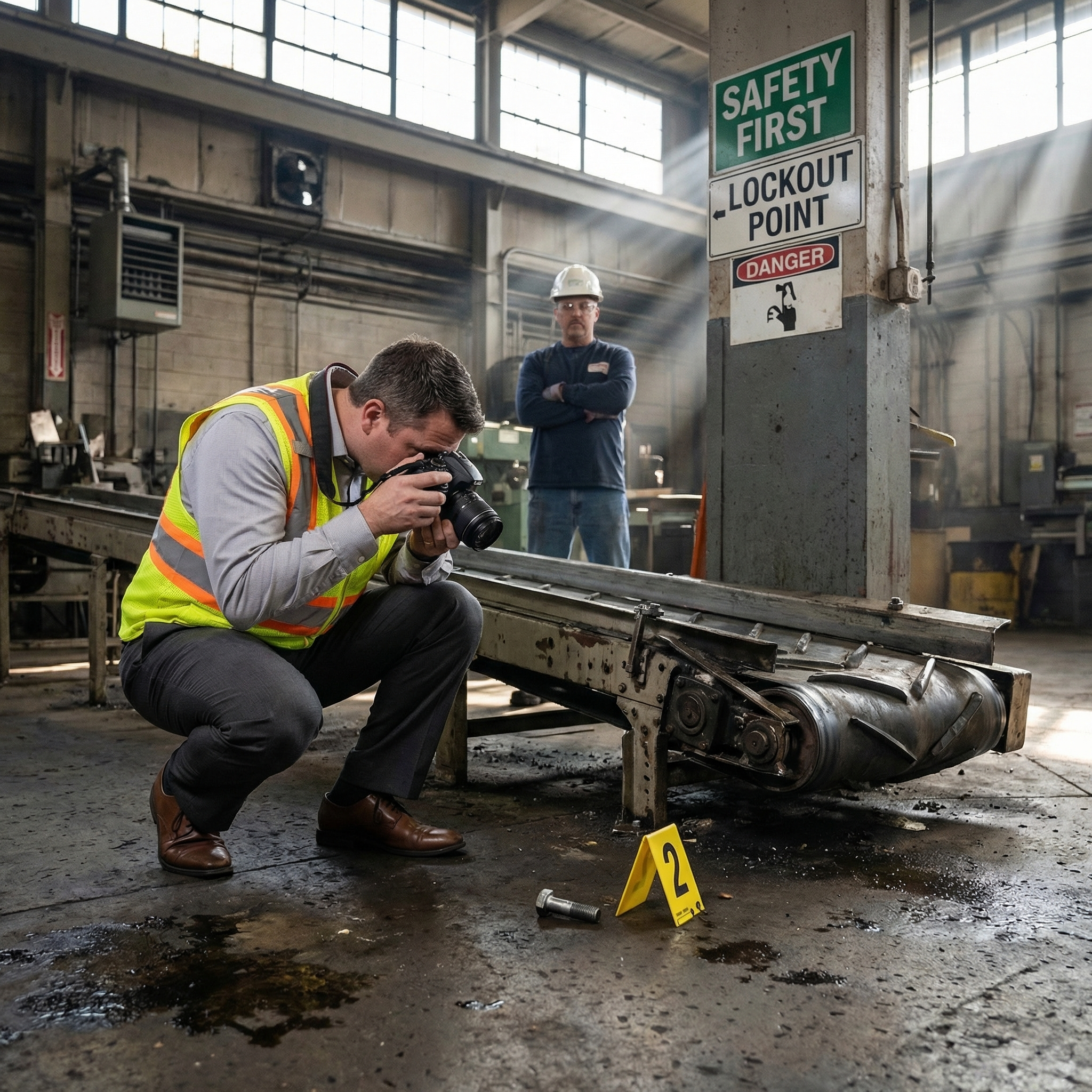
In a personal injury claim, standards become tools for telling a clear, compelling story about what went wrong. Attorneys may introduce safety manuals, training records, inspection logs, and regulatory citations to show patterns of noncompliance. Photographs, videos, and expert testimony can tie those documents to the specific hazard that caused the injury. The goal is to move beyond abstract claims and show concrete steps the employer failed to take. When jurors or adjusters can visualize those missing steps, they better appreciate the full scope of the employer’s responsibility.
- Experts can explain complex regulations in everyday language for juries.
- Side-by-side comparisons of rules and job conditions are powerful visual aids.
- Documented violations can strengthen demands for higher compensation.
Evidence tied to standards also helps counter arguments that an injury was a freak occurrence. If similar incidents happened before, or if audits flagged the same hazard, those records can be especially persuasive. Even when an employer quickly fixes a problem after an accident, earlier documents may show long-term awareness. Lawyers work to secure these materials before they disappear or are modified. Acting quickly after an injury increases the chances that critical safety evidence will still be available.
- Prompt legal help can trigger preservation of inspection and maintenance records.
- Witness statements about past complaints may support a pattern of neglect.
- Regulatory files can reveal previous warnings or penalties for related hazards.
Workers’ Compensation, Third-Party Claims, And Safety Rules
Most employees hurt on the job are covered by workers’ compensation, which does not require proof of fault. However, occupational health standards still matter in these cases, especially when disputes arise about how and where an injury occurred. Clear rule violations can support a worker’s account of events and push back against suggestions that the injury happened elsewhere. In some situations, safety failures may justify penalties or additional benefits under specific state laws. An attorney familiar with occupational standards can identify these opportunities and fight to secure all available relief.
- Standards help clarify whether an injury was truly work-related.
- Evidence of violations can strengthen contested workers’ compensation claims.
- Certain statutes provide enhanced remedies when serious safety rules are ignored.
In addition, some injured workers may have claims beyond workers’ compensation, especially when a third party contributed to the hazard. Examples include unsafe equipment designed by another company or dangerous conditions created by outside contractors. In those cases, occupational standards are central to proving negligence against parties not protected by workers’ compensation rules. Comparing third-party conduct to accepted safety benchmarks shows how their actions increased risk. This broader strategy can significantly increase the overall financial recovery available to an injured worker.
- Third-party defendants often lack the liability protections of an employer.
- Industry standards can be especially important in product-related claims.
- Coordinating comp and third-party claims requires careful legal planning.
Steps Injured Workers Can Take To Protect Their Rights
After a workplace injury, what you do in the first hours and days can affect how well safety standards can be used in your favor. Reporting the incident in writing ensures there is a dated record tied to your job duties and location. Seeking prompt medical care creates documentation of your injuries and how they occurred. If it is safe, photographs or notes about the scene may capture missing guards, cluttered walkways, or poor lighting. These details later help attorneys connect your experience to specific occupational standards.
- Ask a trusted coworker to document conditions if you cannot do so yourself.
- Keep copies of any incident reports or written instructions you receive.
- Avoid signing broad waivers or statements without legal advice.
Consulting with a personal injury or workplace injury lawyer early can also protect critical evidence. Employers and insurers may quickly begin their own investigations focused on limiting liability. An attorney can send preservation requests, identify relevant standards, and advise you on communications with adjusters or supervisors. This guidance reduces the risk of unintentionally undermining your claim. It also gives you a clearer understanding of how safety rules support your legal rights.
- Early legal guidance helps you avoid harmful recorded statements.
- Preservation letters can prevent destruction of vital safety documents.
- Connecting your story to standards strengthens credibility from the outset.
How An Injury Lawyer Builds A Case Around Safety Standards
When a lawyer accepts a workplace injury case, one of the first tasks is mapping the incident against applicable occupational health standards. This often involves site visits, review of technical manuals, and consultation with safety experts. Attorneys look for every point where required protections were missing or watered down. They then assemble a narrative that shows how each failure increased the likelihood or severity of harm. This structured approach turns complex regulations into a straightforward story of cause and effect.
- Chronologies link policy decisions to the moment of injury.
- Visual diagrams can show how a safer design would have changed events.
- Expert testimony bridges the gap between technical language and everyday experience.
Throughout negotiations and, if necessary, trial, standards remain at the center of the legal strategy. They help anchor settlement demands in objective criteria rather than emotion alone. When insurers see that a case is supported by clear rule violations and expert analysis, they may be more willing to resolve the matter fairly. If a case goes before a jury, the same standards guide jurors in deciding whether the defendant acted reasonably. For injured workers, this focus on occupational health rules turns abstract legal rights into practical, enforceable protections.
- Objective benchmarks reduce room for dispute about what was reasonable.
- Well-documented violations can encourage earlier, higher settlement offers.
- Centering standards reinforces that every worker deserves a rule-based, safe workplace.