

Smart Beauty Spending Starts With Research
Every serum, tool, and treatment you buy is a beauty investment, whether it targets fine lines, frizz, or hyperpigmentation. When you compare at-home devices, professional products, and DIY remedies, the true value is rarely printed on the price tag. Cost-effectiveness in beauty comes from understanding cost per use, realistic results, and long-term safety, not just chasing trends. Taking time to research these factors can prevent wasted money on products that underperform or irritate your skin and hair. With a simple framework, you can build a routine that feels luxurious, performs like a pro treatment, and still respects your budget.
Breaking Down Your Beauty Investment Options
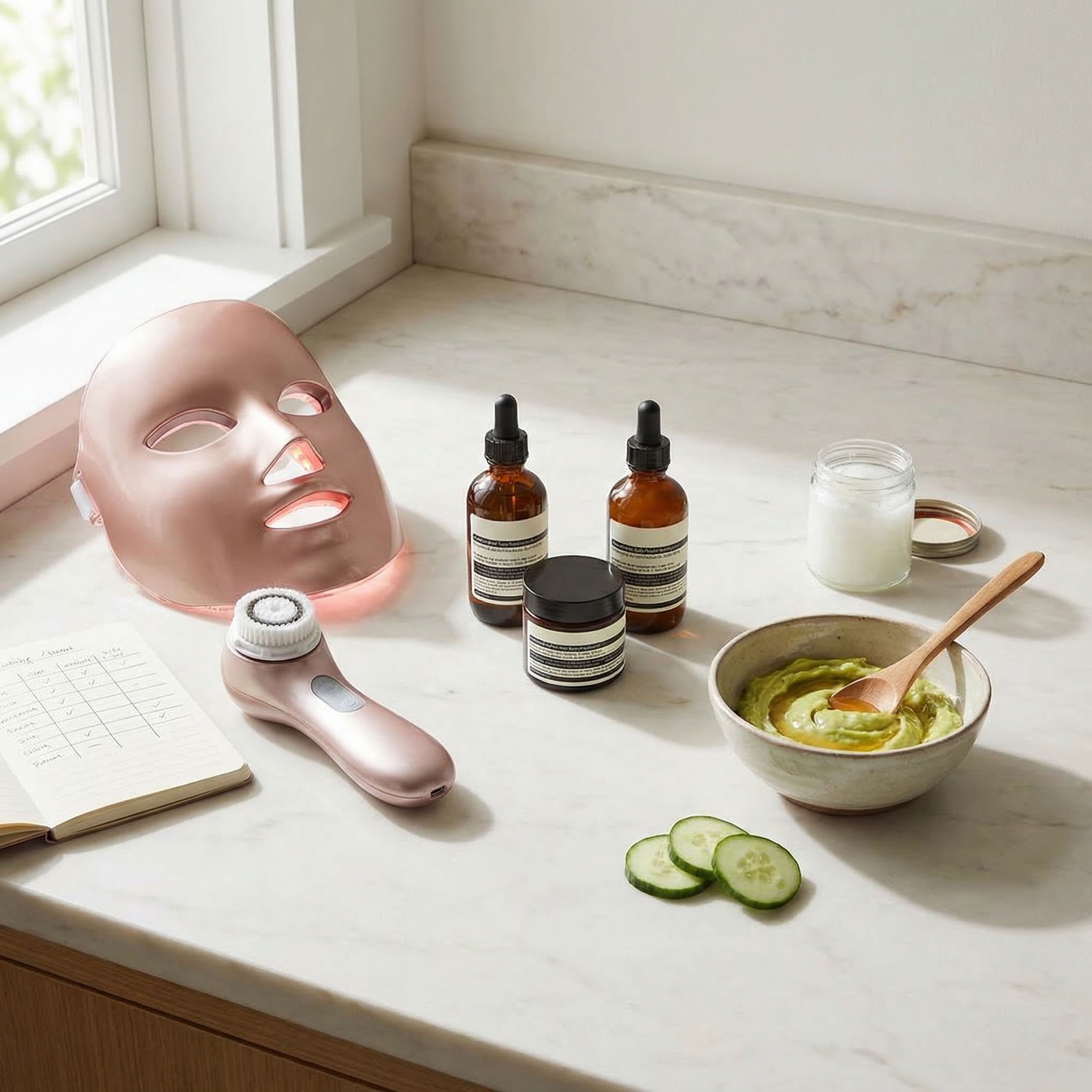
Most beauty spending falls into three buckets, and each plays a different role in your routine. At-home devices promise professional-style results with repeated use, from LED and microcurrent for skin to high-tech dryers and straighteners for hair. Professional products include dermatologist-developed skincare, salon-only haircare, and in-clinic treatments that rely on concentrated formulas or expert technique. DIY remedies use ingredients from your kitchen or basic raw materials, trading polish and preservatives for simplicity and low upfront cost. Knowing which bucket a purchase fits into helps you judge its price against realistic expectations.
- At-home devices: higher upfront cost, lower cost per use over time.
- Professional products: mid to high price, concentrated and targeted formulas.
- DIY remedies: minimal cost, variable consistency and safety.
Each category also carries a different level of risk and learning curve that affects real-world value. A pricey device that sits in a drawer delivers zero return, while a professional exfoliant used correctly can outperform multiple cheap scrubs. DIY masks may feel affordable and fun but can quietly trigger irritation that later requires expensive corrective care. The goal is not to avoid any one category, but to understand which skin or hair goals they are best suited to address. When you match the right type of solution to the right concern, every dollar has a better chance of paying off.
- Reserve complex issues for pros or proven devices.
- Use pro products to maintain results between treatments.
- Keep DIY for low-risk, comfort-focused beauty rituals.
Calculating the True Cost Per Use
Cost per use is one of the fastest ways to evaluate whether a beauty purchase makes financial sense. Start with the total cost of the device or product, then divide by the number of uses you realistically expect over its lifespan. For example, a high-quality LED mask may seem expensive, but if you use it three times a week for a year, each session can cost less than a single professional facial. By contrast, a jar of trendy exfoliating pads that lasts one month at daily use may actually cost more per treatment than a dermatologist-approved bottle of liquid exfoliant. This simple calculation keeps you from being distracted by sticker shock or deceptively low prices.
- Estimate usage honestly, based on your schedule and habits.
- Factor in refills, replacement heads, and cartridges for devices.
- Compare per-use costs to salon or clinic equivalents.
It is equally important to consider waste and product performance when you run the numbers. A jumbo bottle of conditioner that leaves your hair dull or heavy is expensive at any price, because you will eventually replace it early. A slightly more costly retinoid that you tolerate well and finish completely may deliver lower cost per visible result. Think about how concentrated the formula is, how much you need per application, and whether the packaging protects it from light and air. Products that stay stable and effective until the last drop often outperform bargains that degrade quickly. When you measure cost per use alongside finish rate and results, you get a much clearer picture of value.
- Note how quickly you empty skincare and haircare staples.
- Track products you abandon early due to irritation or poor results.
- Prioritize formats that minimize waste, like pumps and airless tubes.
Weighing Results, Safety, and Time
Price and cost per use matter, but results, safety, and time investment ultimately determine whether a solution is truly cost-effective. At-home devices and DIY recipes can be tempting shortcuts, yet misused tools or harsh ingredients may lead to sensitivity, breakage, or pigment changes. Correcting that damage often requires professional treatments and prescription products that cost far more than the original experiment. Professional products and treatments usually come with clearer usage guidelines and expert oversight, which can protect your long-term skin and hair health. When in doubt, err on the side of caution with concerns involving active breakouts, pigmentation, or aggressive exfoliation.
- Reserve high-risk concerns for licensed professionals or supervised protocols.
- Introduce actives slowly, especially acids and retinoids.
- Patch test new products and DIY mixes on a small area.
Time is another hidden cost that changes the value equation for many beauty tools and treatments. Some devices require consistent, scheduled sessions to deliver visible benefits, and skipping weeks at a time can reset your progress. DIY remedies demand shopping, mixing, and cleanup, which may not be realistic during a busy week. Professional services compress expertise, equipment, and results into a single appointment that often includes education you can apply at home. When you compare options, consider whether you can reliably commit to the routine a solution requires to work.
- Choose routines you can maintain on your busiest days.
- Favor devices with shorter, simple session times.
- Use pro visits to refine and simplify your home care plan.
Research Tips for At-Home Beauty Devices
Before investing in any at-home device, start by clarifying the specific concern you want to treat and how severe it is. Then look for clear information on how the device works, including the type of technology used, energy levels, and recommended treatment schedule. Seek out demonstrations from licensed professionals who use similar in-office technologies to understand what realistic results look like. Read user reviews with attention to skin or hair type, age, and how long people used the tool before judging it. Be cautious of dramatic before-and-after photos without context, timelines, or consistent lighting.
- Check whether the brand shares testing or clinical data, not just marketing claims.
- Confirm safety certifications and appropriate usage for your skin tone and type.
- Review warranty terms, return policies, and availability of replacement parts.
Ongoing costs can quietly shift a device from smart investment to money drain. IPL hair removal tools, cleansing brushes, and microdermabrasion systems may require new cartridges, filters, or brush heads to remain hygienic and effective. If the brand frequently reformulates or discontinues parts, you might be left with an expensive gadget you can no longer use. Compare total ownership cost, including accessories, over the expected life of the device to a series of salon sessions. When calculating, consider the added value of professional technique and individualized guidance that come with in-person services.
- List every consumable the device needs to function long term.
- Add these costs into your cost-per-use math from the start.
- Weigh device ownership against a limited series of pro treatments.
Evaluating Professional-Grade Products and Services
Professional-strength skincare, haircare, and in-clinic treatments typically justify their price with concentrated formulas, advanced delivery systems, and expert customization. To assess value, ask about active ingredient percentages, pH levels for exfoliants, and compatibility with your existing routine. Licensed providers can explain why they recommend a particular serum, peel, or hair treatment over a drugstore alternative. Use this information to understand whether you are paying for superior ingredients, better formulation, or simply prestige packaging. When professional products are selected thoughtfully, they often allow you to streamline your routine and buy fewer items overall.
- Request clear instructions and expected timelines for results.
- Ask which steps you can safely replace with more affordable options.
- Schedule follow-ups to adjust your plan based on real progress.
Services such as facials, chemical peels, and in-salon bond-building treatments can also protect your budget when used strategically. A targeted professional peel series, for example, may correct stubborn discoloration more efficiently than cycling through multiple over-the-counter brightening products. Likewise, an occasional in-salon deep treatment can prolong your color and reduce the need for frequent touch-ups and endless repairing masks. Think of these services as anchors that set you up for simpler, more cost-effective home care. When you align professional help with your biggest concerns, you free up money to keep your daily basics streamlined and consistent.
- Use professional visits to solve complex issues, not minor concerns.
- Maintain results with a focused home routine rather than many overlapping products.
- Review your results annually to adjust where you splurge or save.
Reality Check for DIY Beauty Remedies
DIY beauty can feel appealing because it promises customization and very low upfront cost. However, ingredients like lemon juice, baking soda, and undiluted essential oils can disrupt your skin’s barrier or weaken hair over time. Unlike professionally formulated products, DIY mixes usually lack preservatives, stable pH, and controlled concentrations of active ingredients. This can lead to irritation, breakouts, or scalp sensitivity that require stronger corrective products later. When you factor in those hidden repair costs, some homemade treatments become far less budget-friendly.
- Avoid applying highly acidic or alkaline kitchen ingredients directly to skin or scalp.
- Skip food-based exfoliants with sharp particles on your face.
- Always dilute essential oils and patch test before wider use.
There are, however, low-risk ways to incorporate DIY into a cost-effective routine. Simple, soothing treatments such as oat soaks, plain yogurt masks for body areas, or oil pre-shampoo treatments for hair can add comfort without replacing targeted actives. Use DIY primarily to enhance relaxation, hydration, or scalp massage rather than to treat serious concerns like acne or deep pigmentation. Let professionally formulated cleansers, sunscreens, and treatment serums handle the heavy lifting. This balance keeps your experimentation fun while protecting your skin and hair from setbacks.
- Lean on DIY for sensory rituals and mild hydration boosts.
- Keep treatment steps anchored in tested, stable formulations.
- Stop any home remedy at the first sign of irritation.
Designing a Cost-Effective Routine That Actually Works
A smart beauty budget starts with identifying your top one or two concerns for skin and hair. Once you know your priorities, decide which steps must be high-performance and where you can simplify. Many people benefit from investing in a stable sunscreen, a well-formulated treatment serum, and a heat protectant or bond builder if they color or style frequently. From there, you can choose one carefully researched device or a limited series of professional services to address your biggest goals. Fill in the remaining steps with reliable, mid-priced cleansers, moisturizers, and basic styling products.
- Write down your non-negotiable concerns and rank them.
- Assign each concern to the best category: device, pro service, or product.
- Set a yearly budget and divide it across these priorities.
Tracking your routine over time is the final key to long-term cost-effectiveness. Note which purchases you finish, which you forget about, and which genuinely change your skin or hair over several months. Replace abandoned products with more suitable textures, formats, or strengths rather than repeating the same missteps. Revisit your cost-per-use estimates regularly and adjust where you splurge or save based on real results, not just promises. With this approach, every purchase becomes part of an intentional, research-backed strategy instead of a random beauty gamble.
- Keep a simple log of new products, start dates, and reactions.
- Review your cabinet quarterly to declutter and refine.
- Let proven results, not hype, guide your next investment.