

Safety Claims, Product Marketing and the Fact-Finder’s Role
Recent commentary on helmets, cars and trucks highlights a core theme for product liability practitioners: when a company markets a product as “safe,” consumers are entitled to the full story. Buyers make decisions based on those representations, and they should receive enough information to make an educated choice.
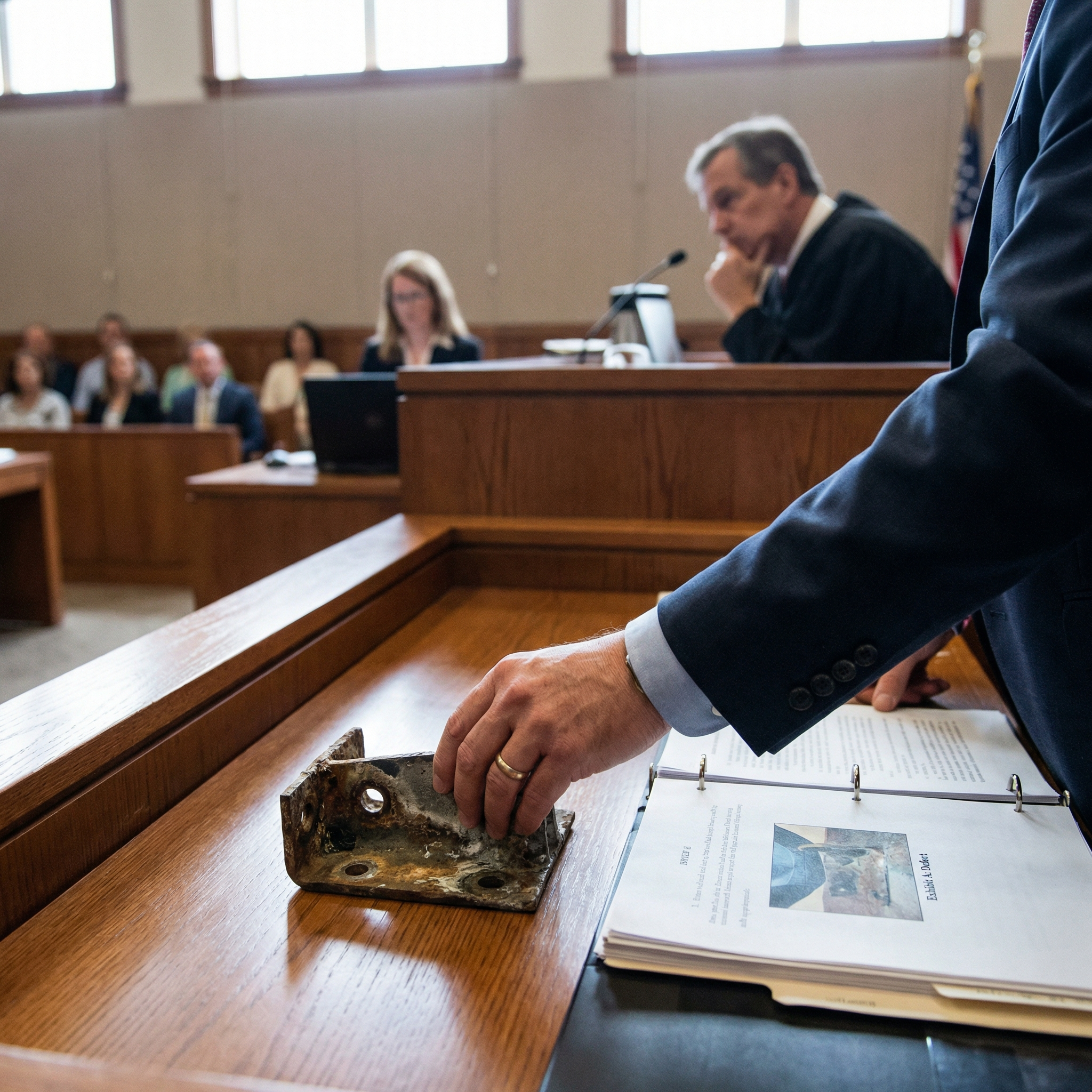
Where pre-sale marketing touts safety but omits information that cuts the other way, the question of liability belongs squarely with the fact-finder. For personal injury lawyers, that reinforces the importance of putting a product’s marketing narrative on trial—not just the engineering.
- Collect and organize advertisements, manuals and online content that promise safety.
- Compare those materials against internal documents or testimony revealing known risks.
- Frame omissions as barriers to informed decision-making, not merely technical disclosure gaps.
In cases involving protective equipment and vehicles, this focus on what consumers were “told” versus what was left unsaid can transform a dry design case into a compelling story about trust and accountability.
Discovery Disputes, Summary Judgment and Appellate Course Corrections
A Louisiana appellate decision reinstating an Am Law 200 attorney’s personal injury claim underscores how vulnerable plaintiffs can be when summary judgment arrives before discovery is complete. In that case, the trial court granted dismissal even though a discovery dispute was still pending.
For injury practitioners, the signal is clear: procedural posture matters as much as facts. When critical discovery remains outstanding, a premature summary judgment ruling may not withstand appellate scrutiny, but only if the record documents those disputes.
- Make a clear record of outstanding discovery and its relevance to liability or damages.
- Press for rulings on discovery disputes before, or contemporaneous with, summary judgment.
- Preserve objections to ensure an appellate court can see the full context.
At the same time, a Georgia Court of Appeals decision clarifying that defense counsel may argue any damages award should be “fair to both parties” adds another wrinkle. That framing is now explicitly recognized as an accepted principle.
Plaintiff lawyers should be prepared to meet “fair to both sides” rhetoric head-on, reframing fairness around full compensation for proven harms instead of compromise for its own sake. Calibrating damages arguments to address jurors’ innate sense of balance—without discounting the client’s needs—will be increasingly important.
Unusual Fact Patterns and Emerging Avenues for Liability
In Connecticut, an unusual claim of negligent interference with a dead body is beginning to create new precedent. Most such claims traditionally target funeral homes, but a novel argument has just cleared its first hurdle against a different type of defendant.
That early success is a reminder that courts remain open to carefully framed, duty-based theories in sensitive contexts. Personal injury and wrongful death practitioners who encounter extreme or atypical fact patterns should not assume traditional defendants or causes of action are the only options.
- Evaluate whether existing duties logically extend to the actors involved, even if they are not typical defendants.
- Anticipate courts’ concerns by grounding novel theories in recognizable harms—such as emotional distress and dignity interests.
- Track emerging precedent in neighboring jurisdictions, which can offer persuasive support.
Elsewhere, a class action in Manhattan federal court challenges alleged systemic barriers to public access in immigration courts. The plaintiffs seek a declaration that restrictive practices violate the First Amendment, federal law and administrative regulations.
While not a traditional injury case, the suit reinforces a broader advocacy point: structural barriers inside court systems themselves can become the subject of litigation. For injury lawyers, similar strategies may be relevant when institutional practices—rather than a single incident—undermine clients’ ability to vindicate their rights.
Institutional Defendants, Abuse Claims and Pleading Pitfalls
Several recent matters involving allegations of sexual assault and abuse against prominent figures and large institutions offer cautionary lessons. In one New York case, city counsel moved to withdraw representation of an ex-mayor in a sexual assault lawsuit after reviewing new evidence and determining he was not entitled to city-funded defense.
In another, a federal judge dismissed claims against a major hotel company in a lawsuit referencing alleged threats tied to a celebrity. The court found the complaint failed to identify any employee or agent connected to the incident and concluded the claim was time-barred under the then-effective version of a New York City gender-motivated violence statute.
- Pleading institutional liability demands specific factual links to employees, agents or policies—not just brand names.
- Statute-of-limitations issues can be outcome-determinative, particularly where protective statutes have changed over time.
- Government-funded representation for individual defendants may hinge on evolving evidentiary assessments.
At the same time, a settlement in principle between a major bank and one of Jeffrey Epstein’s survivors shows that large financial institutions can face meaningful exposure in abuse-related litigation. For advocates, it is another data point supporting careful investigation of third-party facilitation or enabling conduct.
Collision Cases, Causation Battles and Mediation Timing
On the more traditional accident front, insurers continue to make significant payments even when they lean heavily on medical defenses. In New Jersey, an insurer agreed to a $1.5 million settlement after a rear-end collision, despite defense experts in orthopedics and neurology opining that the plaintiff suffered no traumatic injury and that her complaints and neck surgery were solely attributable to longstanding, preexisting conditions.
The settlement illustrates that jurors and carriers may remain skeptical of “no causation” narratives when the collision and the claimed injuries are difficult to untangle. For plaintiffs, thoroughly developing the before-and-after picture of a client’s life can counter assertions that nothing changed because of the crash.
A separate trucking case, in which an appellate court upheld a $2.2 million verdict following a red-light violation at an intersection, reinforces the value of clear liability. When a commercial driver runs a red light and strikes a turning vehicle, the fact pattern supports strong negligence arguments that are resilient on appeal.
Overlaying these outcomes is renewed guidance on mediating catastrophic injury cases. Commentary from a seasoned practitioner stresses that these matters require preparation, timing and balance. When those elements are present, mediation can provide stability, dignity and long-term security for the injured person, while giving the defense predictable closure and better control over risk.
- Use early phases of the case to gather the information needed for realistic long-term planning.
- Approach mediation only when both sides have enough data to evaluate lifetime needs and exposure.
- Balance urgency for financial relief with the danger of locking into numbers before the full picture is clear.
In combination, the settlement and verdict trends suggest that well-prepared collision cases—especially those with clear liability—remain strong candidates for meaningful mediated resolutions.
Practical Moves for Personal Injury and Advocacy Teams
Taken together, these developments point to several concrete steps for firms focused on personal injury and civil rights advocacy.
- Elevate product marketing evidence in any case involving alleged safety features or protective devices.
- Guard against premature summary judgment by documenting discovery needs and preserving objections.
- Stay open to carefully constructed, novel theories where traditional defendants or duties do not fit the harm.
- Draft institutional and abuse-related claims with specific links to actors, policies and timelines.
- Prepare collision and catastrophic injury cases with mediation in mind, even while building for trial and possible appeal.
By reading these signals from recent cases and commentary, injury lawyers can refine both their litigation playbook and their broader advocacy strategy—positioning clients for safer products, fairer verdicts and more durable resolutions.