
Phones Down, Heads Up: Distracted Walking Meets Personal Injury Law
Distracted walking has become a familiar sight on sidewalks, in parking lots, and at busy intersections, as pedestrians glance at screens instead of their surroundings. Public health initiatives are responding with campaigns that warn about these dangers, promote safer habits, and remind everyone to stay alert. While these programs are designed to prevent injuries, they also shape how personal injury claims are evaluated after an incident. When a pedestrian is hurt, questions about awareness, responsibility, and reasonable behavior often center around the same themes promoted by public health messaging. For injured people and their families, understanding this overlap can make a real difference in protecting both health and legal rights.
Personal injury attorneys are paying close attention to how public health initiatives frame distracted walking risks. Safety slogans, school programs, and neighborhood outreach efforts do more than raise awareness; they help define what a community considers common sense precautions. In many cases, that can influence whether an injured pedestrian is viewed as careful, careless, or somewhere in between. By aligning injury claims with the best practices promoted by public health campaigns, lawyers can better explain to insurers, judges, and juries why an injured pedestrian deserves fair compensation.
From Public Health Message To Legal Evidence
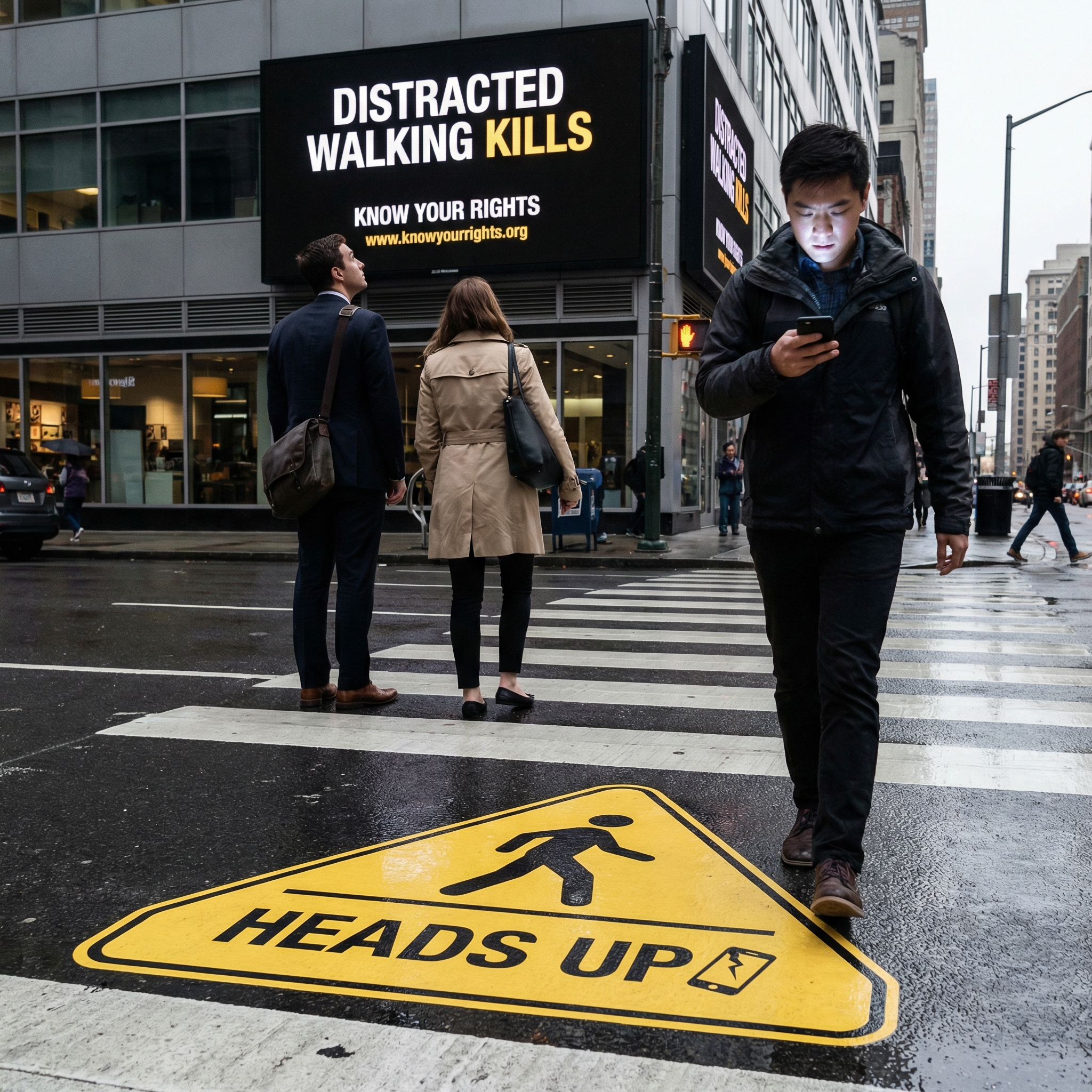
Public health agencies often use posters, social media, and community presentations to highlight the dangers of looking at a phone while crossing streets or walking near traffic. These materials emphasize real-world consequences, such as missed signals, unseen vehicles, or hazardous obstacles. In a personal injury case, similar themes can support arguments about foreseeability, meaning whether a risk was obvious enough that drivers, businesses, or property owners should have anticipated it. If a danger is widely publicized in a community, it becomes harder for a negligent party to claim they did not know the risk existed. Public health messaging, therefore, can indirectly help show that others had ample warning about distracted walking hazards but still failed to act safely.
For example, if a shopping center promotes safety tips on its property but ignores poorly marked crosswalks or confusing traffic patterns in its parking areas, that mismatch can be important. A personal injury lawyer may point to the public health messaging as proof that the property owner knew pedestrian safety was a concern but failed to follow through with reasonable protections. Public safety campaigns can thus function as context, illustrating that distracted walking and vehicle-pedestrian conflicts are not rare surprises but known, preventable issues. When combined with photos, witness statements, and expert analysis, these campaigns help build a fuller picture of negligence.
How Campaigns Shape Expectations For Safe Walking
Public health initiatives often include simple, memorable rules for pedestrians, like staying off phones while crossing, making eye contact with drivers, and using designated crossings. Over time, these rules can become community norms, shaping what is considered responsible behavior for both walkers and motorists. In personal injury claims, those norms can influence how conduct is judged, even when they are not written into law. A driver who speeds through an area known for school safety programs, for instance, may be seen as disregarding widely shared expectations about careful driving near distracted youth. These broader expectations can support the argument that the driver acted unreasonably under the circumstances.
At the same time, public health messages can shape expectations for pedestrians, especially when campaigns target device use while walking. Insurance adjusters and defense attorneys may argue that a pedestrian failed to follow widely promoted safety advice, even where no specific statute requires it. This does not automatically defeat a claim, but it does add another layer to how behavior is evaluated. A skilled personal injury attorney will be prepared to explain how real-world conditions, confusing signals, or a driver’s more serious misconduct still make the injured pedestrian’s claim valid and compelling.
Distracted Walking And Shared Fault In Injury Cases
In many jurisdictions, personal injury cases involving pedestrian incidents are decided under rules that allow fault to be shared between the people involved. Public health campaigns about distracted walking can play into these shared-fault arguments. If an injured pedestrian was using a phone at the time of the collision, the defense may contend that public messaging made the risks obvious and that the pedestrian bears some responsibility. The question then becomes how much that alleged distraction actually contributed to the injury compared to the other party’s negligence. Public health initiatives may be cited to claim that ignoring safety advice was unreasonable, but that is rarely the end of the story.
Attorneys representing injured pedestrians can push back by examining all of the circumstances, not just the presence of a phone or headphone. They may highlight factors such as a driver’s speed, failure to yield, poor visibility, or lack of adequate warnings in high-risk areas. They can also point out that many public health campaigns emphasize shared responsibility between drivers and pedestrians, rather than placing all blame on the person walking. By presenting a balanced view, lawyers can argue that even if the pedestrian was distracted, the other party’s negligence was the primary cause of the harm and should be reflected in the final outcome.
Where Public Health Initiatives Strengthen A Pedestrian’s Claim
Public health initiatives do more than warn against distractions; they often call for better safety policies and infrastructure to protect people on foot. When cities, schools, or community groups identify certain intersections, transit stops, or parking areas as particularly risky, that recognition can become significant in a personal injury case. If authorities or property owners acknowledged those risks through awareness campaigns but failed to make reasonable changes, that history can support a claim that the danger was known and neglected. Public warnings can thus support the argument that responsible parties had ample opportunity to act but chose not to.
In addition, safety campaigns may recommend specific actions, such as better lighting, clearer signage, or traffic calming near heavy pedestrian activity. When these recommendations are not followed, and a distracted walking incident occurs, attorneys can point to the gap between advice and action. This gap can be powerful in negotiations, showing that prevention was both possible and publicly encouraged. Public health initiatives, therefore, may help transform an injury from an unfortunate mishap into a clearly preventable event in the eyes of an insurer or court.
Practical Steps To Protect Your Health And Your Case
Public health messages about distracted walking are not just abstract slogans; they offer practical steps that also protect your legal interests. Avoiding phone use while crossing, removing headphones near driveways and intersections, and scanning for turning vehicles all reduce the likelihood of serious injury. If an incident does occur, being able to say you followed common safety advice can support your credibility. It can show that you took reasonable care for your own safety, even if another person’s negligence ultimately caused the harm. Aligning your everyday habits with these safety messages is good for both your wellbeing and any future claim.
When you walk in areas with active safety campaigns, take note of signs, road markings, and public reminders about pedestrian behavior. If you are injured, documenting those features through photos and notes can help your attorney understand the full environment in which the incident occurred. These details can reveal whether responsible parties followed their own recommended safety practices or merely posted reminders without addressing underlying hazards. Sharing this information early with legal counsel allows them to build a case that accurately reflects both your actions and the broader safety context. That combination can be persuasive when negotiating with insurers or presenting your story in court.
What To Do After A Distracted Walking Incident
If you are involved in a pedestrian incident where distraction may be an issue, your first priority is always medical care. Even if injuries seem minor, symptoms such as dizziness, pain, or confusion can develop later, making prompt evaluation important. When safe to do so, collect contact information from witnesses and note whether there are public health signs, banners, or pavement markings nearby that address pedestrian safety. These details may help clarify how visible the risks and warnings were to everyone involved. They also help your attorney understand how public health messaging interacted with the specific facts of your case.
After receiving medical attention, contacting a personal injury attorney experienced with pedestrian cases can help protect your rights. Be honest about any distraction on your part, such as using a phone or listening to music, and provide as much detail as possible about how the event unfolded. A knowledgeable lawyer can evaluate how public health initiatives in your area might influence liability arguments, defenses, and settlement negotiations. They can also advise you on preserving evidence, dealing with insurance companies, and avoiding statements that could be taken out of context. With informed guidance, you can focus on healing while your legal team works to turn safety messages into meaningful accountability.