
Legal Clinics Stepping Beyond the Courtroom
Legal clinics are no longer just quiet rooms where forms are filled out and cases are screened. Across the country, many clinics are turning themselves into community classrooms focused on injury prevention and legal rights. This shift matters because most people only meet a personal injury lawyer after something has already gone terribly wrong. By then, important evidence can be lost and preventable harm has already changed a family’s future. When clinics teach safety and rights in advance, they help reduce injuries and prepare people to respond wisely if an accident happens.
Personal injury law has always been about accountability and compensation, but education adds another layer of protection. When community members understand common sources of harm and the legal duties that surround them, they make safer choices for themselves and their neighbors. They also recognize when someone else’s negligence has crossed the line from “unfortunate” to “unlawful.” That knowledge changes how quickly they seek help, what information they save, and whom they trust. In this way, legal clinics are quietly reshaping how communities think about safety and justice.
From Free Advice to Ongoing Injury Prevention Programs
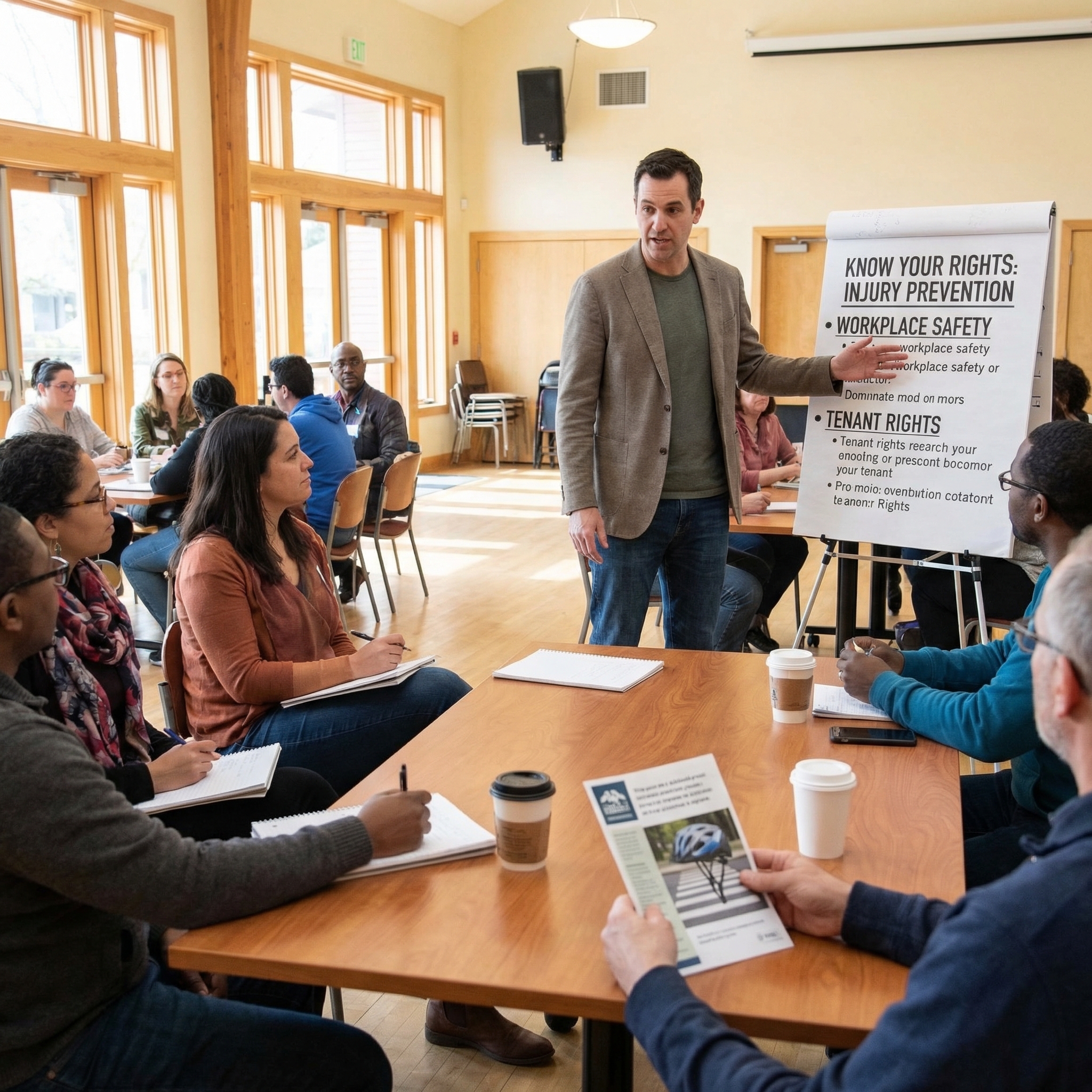
Traditional legal clinics focus on one-time consultations where people bring a specific problem to a lawyer. Modern community-focused programs go further, organizing recurring classes on topics that frequently lead to serious injuries. These sessions might cover subjects like safely navigating public spaces, avoiding hazards in rental housing, or recognizing risky conditions in everyday environments. Lawyers translate complicated legal concepts, like duty of care and negligence, into plain language that people can immediately apply. By repeating these programs regularly, clinics build a culture of awareness rather than one-time emergency fixes.
Ongoing education also helps clinics spot patterns that individual clients might never see. When many participants report similar unsafe conditions, such as poorly maintained properties or recurring hazards in certain businesses, lawyers can identify broader trends. That insight allows advocates to adapt their classes to address emerging community risks before they become widespread crises. It may also support larger legal or policy efforts aimed at changing dangerous practices for everyone, not just for one injured person. In this sense, a classroom conversation today can become the foundation for community-wide safety improvements tomorrow.
Teaching Everyday Injury Prevention Through a Legal Lens
People often think of injury prevention as the job of doctors, engineers, or safety inspectors, but the law plays a crucial role. Legal clinics show how rules about reasonable care shape the design and maintenance of spaces where we live, shop, and relax. Participants learn that landlords, businesses, transportation providers, and many others have duties to keep users reasonably safe. They also explore what it means to act responsibly themselves, such as paying attention to visible hazards and following posted warnings. Seeing prevention through a legal lens helps them connect daily choices to the rights they may later need to enforce.
These conversations go far beyond simply warning people to “be careful.” Clinic educators explain how an unsafe condition becomes a legal issue once someone is harmed by another’s unreasonable conduct. Attendees are encouraged to think through real-world examples and discuss what a careful person or company should have done differently. This back-and-forth dialogue helps people recognize danger signs earlier, from poorly lit walkways to recurring spills that are never cleaned. When communities can spot these warning signals, they can speak up before someone suffers a serious injury. That proactive awareness is exactly what turns education into prevention.
Know-Your-Rights Sessions After an Injury
Even when an accident cannot be prevented, legal clinics can greatly improve what happens next through know-your-rights workshops. These sessions often walk participants through the immediate steps to take after an injury, long before any lawsuit is considered. People learn why prompt medical attention is important not only for health but also for documenting harm. They receive guidance on safely collecting details like photos, names of witnesses, and incident reports. Participants also hear about common pitfalls, such as signing broad releases or giving recorded statements without understanding the consequences.
Clinics emphasize that seeking information is not the same as rushing into a lawsuit. Instead, they frame early education as a way to protect options while the injured person decides what is best for their family. Workshops clarify typical time limits for filing personal injury claims and how those deadlines can vary. Attendees also learn that not every accident leads to a case, but every injured person has a right to honest answers. By setting realistic expectations, clinics build trust and help people feel more in control during an overwhelming time.
Reaching Communities Where Injuries Are Often Overlooked
Some neighborhoods face higher rates of preventable injuries but have less access to legal information and representation. Legal clinics help fill this gap by bringing programs directly to community centers, libraries, and faith-based organizations. Rather than waiting for clients to travel to a downtown office, lawyers meet people where they already gather. This approach reduces barriers like transportation, work schedules, and mistrust of formal institutions. It also signals respect for the lived experiences of communities that may feel ignored when harm occurs.
When legal educators listen closely, they often hear about injuries that never make the news or a courtroom. These might include recurring falls in poorly maintained apartment complexes or repeated incidents involving the same local business. By documenting these stories, clinics can identify systemic issues and tailor their teaching to the risks residents actually face. They can also connect individuals to further legal help when appropriate, ensuring that patterns of negligence do not stay hidden. Over time, this kind of outreach helps communities see that the law belongs to them, not just to institutions.
Partnering With Health Providers, Schools, and Local Leaders
Effective injury prevention and rights education rarely happens in isolation, so many clinics build strong partnerships. Health providers may invite legal teams to speak at rehabilitation centers, emergency departments, or community health fairs. Schools might host age-appropriate sessions that help families understand their responsibilities and protections on and off campus. Neighborhood associations and tenant groups often welcome presentations that address hazards in shared spaces and common areas. Each partner helps clinics reach audiences that might never attend a traditional legal workshop on their own.
These collaborations create a more complete safety net for injured people and those at risk. When doctors, social workers, and educators understand the basics of personal injury rights, they can confidently refer individuals to trusted legal resources. At the same time, lawyers gain insight into the practical challenges their clients face long before a case is filed. That shared understanding leads to more realistic advice, better-prepared clients, and stronger cases where claims are appropriate. Most importantly, it weaves legal protection into everyday places where people already seek help and guidance.
What Community Members Can Expect at a Legal Clinic Program
Many people hesitate to attend a legal clinic because they fear being judged, overwhelmed, or pressured. In reality, most educational sessions are designed to be welcoming, conversational, and free of legal jargon. Presenters usually start with a clear overview of the topic and invite questions throughout. Handouts summarize key points so participants do not need to memorize legal terms on the spot. Attendees are typically encouraged to share their own experiences while keeping details confidential if they prefer.
Clinic programs often end with practical checklists or step-by-step guides that participants can take home. These tools might outline what to do after an injury, how to document unsafe conditions, or when to consider calling a lawyer. Facilitators usually stick around afterward to answer individual questions or schedule follow-up appointments if needed. No one is required to pursue a claim, and the focus remains on informed decision-making rather than quick case signups. This supportive atmosphere helps turn intimidating legal topics into accessible, everyday knowledge.
Supporting and Expanding Legal Education in Your Community
Community members do not have to be lawyers to help strengthen local legal education efforts. Residents can start by attending available programs and sharing what they learn with family, friends, and coworkers. They can also encourage schools, workplaces, and neighborhood groups to host sessions on injury prevention and rights. Community leaders may partner with clinics to translate materials, provide space, or help advertise events in multiple languages. These simple actions help increase attendance and make education more representative of the whole community.
Law firms and legal organizations can also play a role by donating time, funding, or educational materials. Even busy litigators can contribute by presenting at occasional workshops or helping design clear, accurate handouts. As more professionals get involved, clinics can offer a wider range of topics and reach more audiences. Over time, this shared commitment builds a community where people are better equipped to avoid harm and to stand up for their rights when injuries do occur. In that environment, personal injury law fulfills not only its role in the courtroom but also its promise as a tool for everyday protection.