

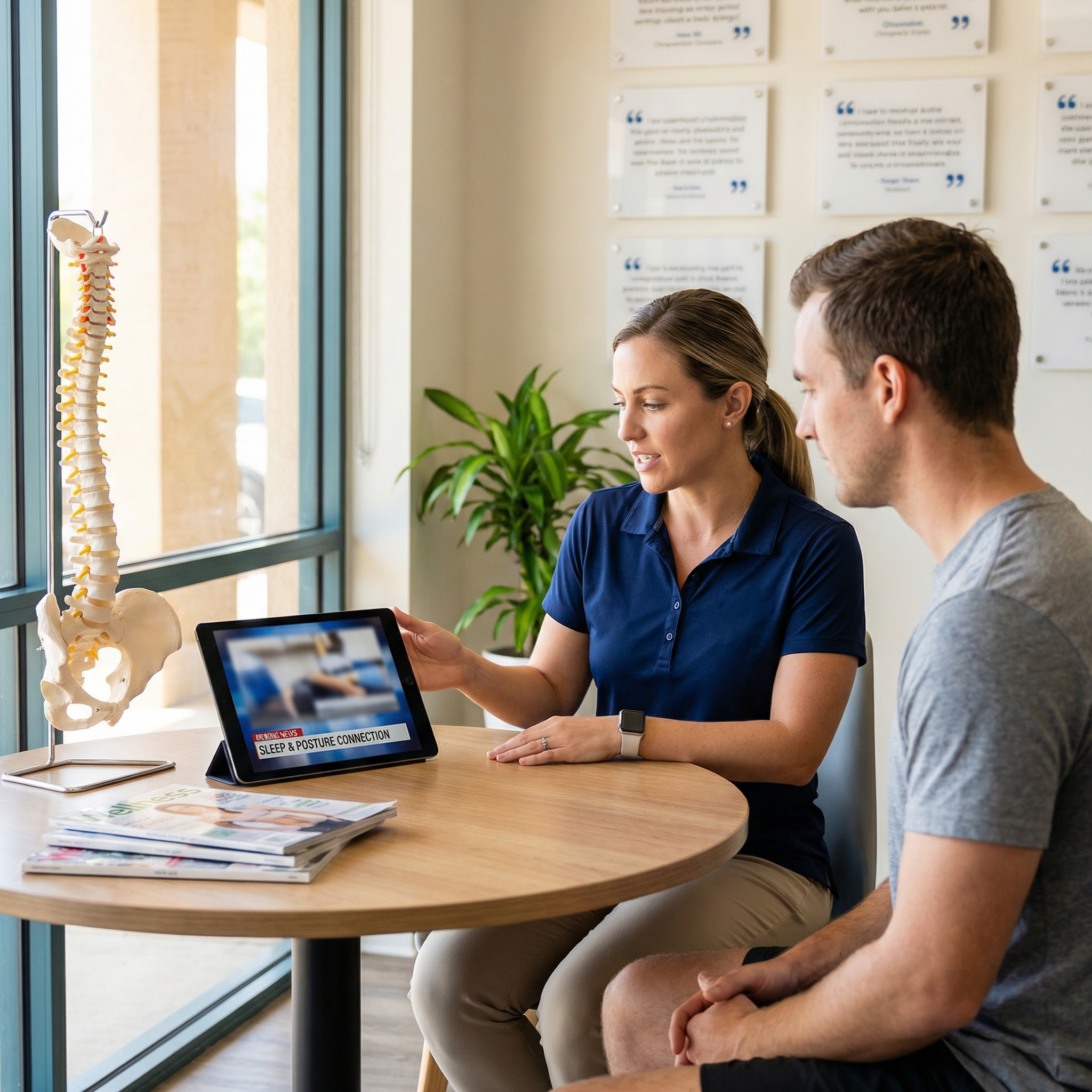
Chiropractic Patients Are Following the Wellness Headlines
Wellness news is moving fast, and your patients are paying attention. Recent headlines span everything from workplace wellness conferences to new nutrition products, healthy aging initiatives, and even questions about traditional health metrics.
For a chiropractic or spine-focused clinic, these stories are more than background noise. They are real-time clues to what your patients care about, how they define “health,” and what they expect from a modern, wellness-oriented practice.
Moving Beyond BMI: A Wider View of Health in Your Clinic
PHYSICALMIND Institute recently released its WELLVILLE Public Service Announcement in response to new wellness research, including a study suggesting that BMI may be obsolete. That kind of headline encourages patients to question narrow, one-number views of health.
Chiropractic care already emphasizes function, movement, and overall well-being. You can make that philosophy more visible by explicitly framing your care in terms that go beyond weight alone.
- Highlight posture, mobility, and daily comfort in your patient education materials.
- During consultations, connect spinal health with overall wellness instead of focusing on a single measurement.
- Borrow the language of “whole-person wellness” from campaigns like WELLVILLE when describing your approach.
As more patients hear that BMI may not tell the full story, they will look for providers whose philosophy already reflects a broader, more individual definition of health.
Workplace Wellness and Performance: Aligning with Employer Priorities
Wellness Workdays, a provider of measurable workplace wellness programs that drive quantifiable reductions in healthcare costs and improve outcomes, is announcing its 2026 conference speakers. Headlines like this signal that organizations continue to invest heavily in wellness and performance.
For spine-focused clinics, that interest in measurable wellness is an opportunity to become a natural partner for employers who care about employee comfort and productivity.
- Create simple, data-friendly offerings such as posture screenings or ergonomic check-ins that workplaces can easily understand and promote.
- Offer short educational sessions on spinal health for remote and on-site workers, linking comfort and focus at work.
- Use language employers already respond to—“performance,” “healthcare costs,” and “measurable wellness”—when describing the value of your services.
As workplace wellness conferences gain visibility, positioning your clinic as a resource for employee health can help you reach more people who spend long hours sitting, lifting, or working in physically demanding roles.
Healthy Aging and Precise Care for Older Adults
Mediaplanet’s Healthy Aging Revolution, launched within USA Today and online and headlined by Toni Collette, brings together diverse voices around aging well. At the same time, Watercrest Senior Living Group is partnering with Inspiren, an AI-powered platform, to drive more precise care in assisted living and memory care settings.
These stories point to a growing expectation that aging should be proactive, personalized, and dignified—an expectation that aligns naturally with chiropractic care for older adults.
- Frame spinal care as part of aging well, emphasizing balance, comfort, and confidence in daily activities.
- Review your intake forms and care plans to see where they can better reflect individualized goals for older patients.
- When speaking with families and caregivers, borrow the “precise care” language emerging in senior living to explain how tailored treatment plans support safety and independence.
By echoing the healthy aging and precision-care themes appearing in the news, your clinic shows older patients and their families that you are tuned into their priorities.
Nutrition Headlines and the Wellness-Oriented Patient
Recent product and market news shows just how quickly nutrition-driven wellness is expanding. Protein bars alone are projected to grow from about US$ 12.6 billion in 2026 to US$ 19 billion by 2033, fueled by health-and-wellness trends and convenience demand.
At the same time, several brands in the feed—HEYBAR, a plant-based protein bar; Lifeway Foods, supplying kefir and fermented probiotic products; wildbrine’s fermented bean salad at the intersection of protein, fiber, and probiotics; Hifas da Terra’s science-backed mushroom supplements; and even Target’s move to carry only cereals made without certified synthetic colors—demonstrate how mainstream wellness choices are becoming.
- Expect patients to arrive already using protein products, fermented foods, or “cleaner” packaged options as part of their wellness routines.
- When appropriate, acknowledge these efforts and connect them to spinal comfort, recovery, or energy for movement without endorsing specific products.
- Use patient education materials that recognize protein, probiotics, and ingredient quality as common talking points in the wellness landscape.
You do not have to become a nutrition retailer to stay relevant. Simply showing that you understand the wellness-focused choices your patients see in headlines and store aisles helps them feel seen and supported.
Women’s Health, Mental Health, and a More Inclusive Wellness Conversation
The SHE Media Co-Lab is returning to SXSW, spotlighting the future of women’s health. Blue Shield of California Promise Health Plan is collaborating with partners to empower Black women for career success. Atlanta Technical College is partnering with Uwill to strengthen mental health and wellness support for students.
Together, these developments illustrate a broader trend: wellness conversations are becoming more inclusive, more gender-aware, and more open about mental health.
- Review your imagery and language to be sure women and diverse communities are visibly represented in your chiropractic clinic’s materials.
- Consider adding gentle screening questions or resources related to stress and mental wellness, especially as stress can influence muscle tension and perceived discomfort.
- For student and young adult patients, acknowledge the pressures they face and how body care, movement, and posture can support their overall well-being.
Aligning with these inclusive wellness narratives helps your practice feel welcoming and current to a broader range of people seeking spinal care.
Turning Today’s Headlines into Tomorrow’s Patient Experience
From WELLVILLE’s challenge to BMI, to workplace wellness conferences, to healthy aging and fast-growing nutrition categories, today’s headlines are shaping patient expectations long before they walk into your adjusting room.
A simple way to respond is to translate these signals into tangible updates inside your clinic.
- Refresh website copy to emphasize whole-person wellness, healthy aging, and inclusivity alongside spinal health.
- Update waiting-room materials with short explanations of how chiropractic care supports movement, comfort, and daily performance at work and home.
- Train your team to recognize when a patient references a wellness trend—from protein bars to workplace stress—and connect that concern back to your clinical expertise.
As the wellness world evolves, spine-focused clinics that listen closely to these signals can position chiropractic care as a central, trusted part of their patients’ broader wellness journey.