

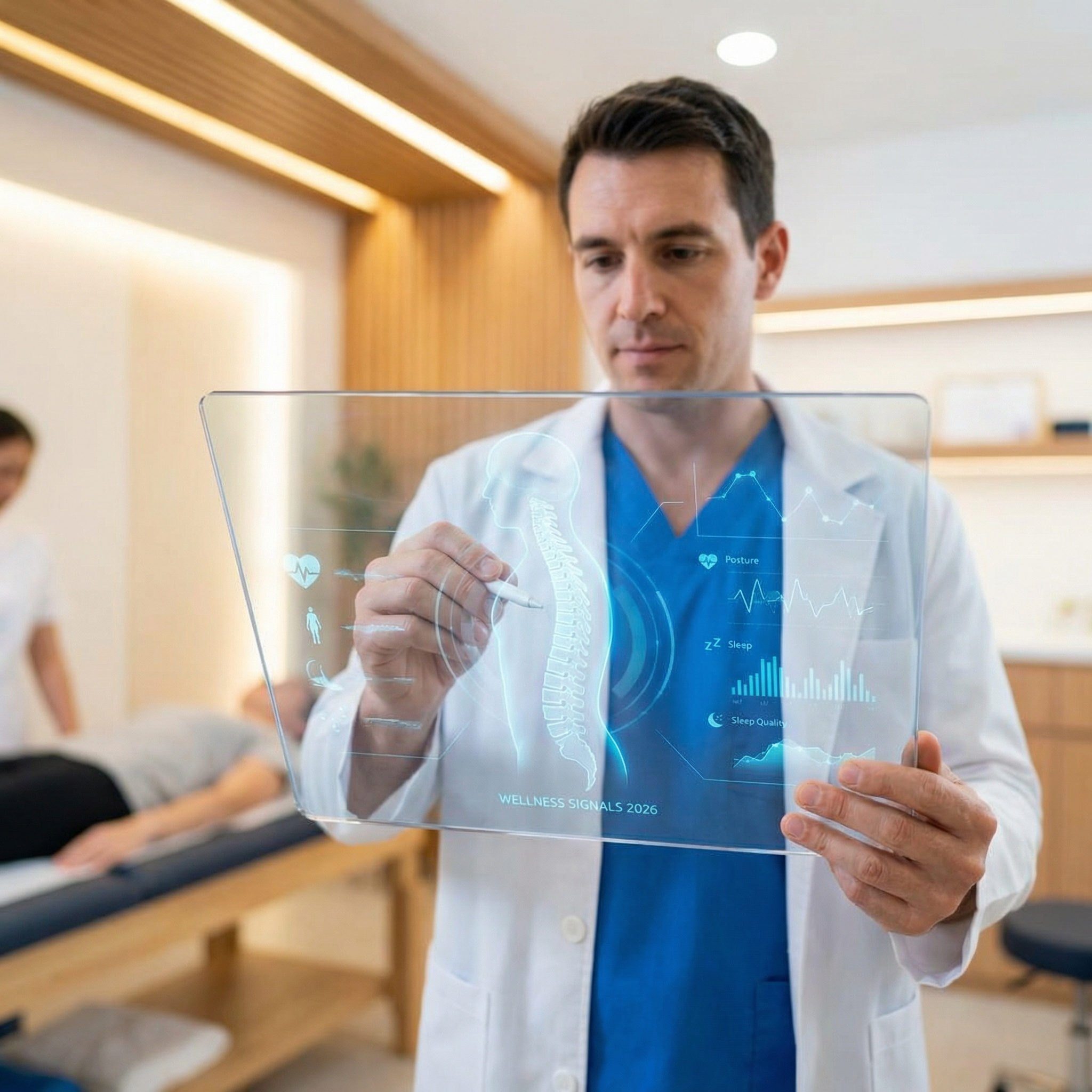
Wellness trends reshaping how patients think about their health
Across the wellness world, 2026 is already full of signals that patients are rethinking what health really means. Recent announcements span workplace wellness programs, healthy aging initiatives, mental health support, and new approaches to nutrition and body composition.
For chiropractic and spinal health providers, these developments offer a preview of what your patients are reading, buying, and expecting from their care. Paying attention to these shifts can help you speak your patients’ language and better support their long-term well-being.
Workplace wellness moves from perk to performance driver
Wellness Workdays, a provider of measurable workplace wellness programs, highlights how employers now look for initiatives that deliver quantifiable reductions in healthcare costs and boost employee engagement. These are not feel-good perks; they are performance strategies.
That mindset matters for spine-focused practices that serve working adults. Employees sitting all day, lifting, commuting, and juggling stress are increasingly part of structured corporate wellness efforts, not just occasional health fairs.
- Partnering with employers that value measurable results can align spinal care with broader wellness goals.
- Documenting functional improvements, comfort at work, and mobility can speak directly to the outcomes employers now prioritize.
Healthy aging becomes a mainstream expectation, not a niche goal
Mediaplanet’s Healthy Aging Revolution, launched within USA Today and online, brings together a range of voices focused on aging well. At the same time, JBM Institutional Multifamily Advisors is exclusively listing Soléa Wellen Park, a luxury, 55+ active adult community in the Sarasota metro area.
Watercrest Senior Living Group is also partnering with Inspiren, an AI-powered technology platform, to drive more precise care in assisted living and memory care settings. Together, these stories point to an older population that expects active, tech-informed, wellness-centered lifestyles.
- Active adult housing and senior living communities are positioning wellness and activity as central features, not add-ons.
- Older adults are likely to seek care teams who respect their desire to stay engaged, mobile, and independent.
Movement gets gamified and upgraded
Betterness has unveiled an “agent-first” wellness infrastructure with Augmented Games, described as the first real-world clawbot-powered AI-human competition. At the same time, Crunch Fitness is bringing a $5 million, 40,000-square-foot, state-of-the-art Crunch 3.0 facility to Mesquite, Texas.
Both developments send a clear message: people are being invited to move through experiences that feel modern, fun, and immersive rather than routine or boring.
- Gamified movement and high-tech gyms can shape patients’ expectations around exercise recommendations they receive.
- Spine-focused providers who frame movement as engaging, trackable, and progressive are more likely to resonate with these expectations.
Nutrition trends lean into gut health, protein, and plants
Nutrition news in the wellness space is equally dynamic. Lifeway Foods is celebrating 40 years of kefir leadership and unveiling new cultured dairy innovations. Wildbrine has launched what it calls the first packaged fermented bean salad at the intersection of protein, fiber, and probiotics.
HEYNU is releasing HEYBAR, a plant-based, better-for-you protein bar, while a market report from Persistence Market Research projects the global protein bars market to grow from about US$ 12.6 billion in 2026 to US$ 19 billion by 2033, driven by health-and-wellness and convenience trends. Canoly reports that its C16 cold press juicer hit 100,000 sales within six months of launch. Hifas da Terra is entering the U.S. market with science-backed medicinal mushroom supplements.
- Patients are embracing fermented foods, plant proteins, and convenient protein options as part of everyday wellness.
- Many will arrive already experimenting with kefir, fermented salads, juices, bars, and mushroom supplements to support how they feel and function.
Weight conversations shift as BMI is called into question
The PhysicalMind Institute has released WELLVILLE, a public service announcement created in response to new wellness research suggesting that body mass index (BMI) may be obsolete. Versions of the announcement have been shared in multiple languages, underscoring global interest in rethinking how we measure health.
For providers working with patients who associate back pain or mobility challenges solely with a number on the scale, this is a turning point. Weight still matters to many people, but there is growing awareness that it is not the only—or necessarily the best—indicator of health.
- Patients are increasingly open to conversations that focus on strength, function, and overall vitality, not just BMI.
- Objective measures like ease of movement, daily comfort, and activity level may feel more motivating than weight alone.
Mental health and belonging become core wellness pillars
Atlanta Technical College has partnered with Uwill, described as a leading mental health and wellness solution for colleges, to enhance support for students. Blue Shield of California Promise Health Plan and L.A. Care Health Plan are collaborating with the California Black Women’s Collective Empowerment Institute to empower Black women for career success.
National No One Eats Alone Day, supported in Kentucky schools by WellCare of Kentucky and Sandy Hook Promise, focuses on ending social isolation among students. Together, these stories position emotional well-being, inclusion, and community as non-negotiable elements of overall health.
- Patients may expect their care experiences to feel emotionally safe, inclusive, and community-minded.
- Creating a sense of belonging in healthcare spaces can align with widely publicized mental wellness priorities.
Women’s health and future wellness take center stage
The award-winning SHE Media Co-Lab is returning to SXSW for its fourth year, highlighting the future of women’s health by convening leaders across healthcare, media, and culture. Dress for Success Worldwide is relaunching its Women Who Inspire campaign to advance women in the workplace globally.
In parallel, naturopathic medical doctor Marcus Coplin has released a white paper titled Future Wellness 2026: Seven Frontiers Redefining Human Vitality, pointing to evolving frontiers in how we think about being well.
- Women’s health and empowerment are being discussed on major stages, shaping what many patients prioritize in their care.
- Patients may increasingly look for health teams that recognize their broader life goals, not just their immediate symptoms.
Technology, data, and precision care expand across wellness sectors
Beyond Inspiren’s AI-powered platform in senior living, other sectors are rapidly digitizing. A report from Mordor Intelligence notes strong growth in the digital dentistry market, while Hologenix and Innovative Korean Solutions are pairing CELLIANT infrared technology with a new skincare mask line.
Across these examples, technology is being used to personalize care, track outcomes, and integrate wellness into everyday products and environments.
- Patients are becoming more comfortable with tech-enabled, data-informed experiences in many areas of health.
- Clear communication about goals, progress, and comfort can help bridge traditional hands-on care with tech-savvy expectations.
Bringing it back to spinal health and everyday practice
From healthy aging communities and workplace wellness programs to fermented foods, protein bars, and questions around BMI, wellness in 2026 is broader and more interconnected than ever. Patients are encountering these ideas in national media, senior living communities, college campuses, grocery aisles, and fitness centers.
Spine-focused practices that listen to these signals and align their communication with them can strengthen trust, improve engagement, and support more sustainable, whole-person wellness journeys—one visit at a time.